
Human Symptom Drift Engine.
Biological System Simulation // Pathophysiological Escalation // Clinical Modeling
Sudden High Fever
Acute onset of high temperature, often exceeding 38.5°C.
"Fever is typically the first symptom to manifest after the incubation period (2-21 days). It is often accompanied by extreme fatigue and muscle pain."
Oral temperature >38.5°C with rapid onset. Differentiate from malaria and typhoid fever via rapid diagnostic tests (RDTs).
Hemorrhagic Manifestations
Internal and external bleeding, including gastrointestinal and mucosal bleeding.
"Coagulation failure leads to petechiae, ecchymoses, and bleeding from venipuncture sites. Hematemesis and melena are common in late stages."
Visible mucosal bleeding, positive tourniquet test, or laboratory evidence of disseminated intravascular coagulation (DIC).
Multiorgan Failure
Rapid progression to renal and hepatic failure in advanced stages.
"Elevated serum creatinine and liver enzymes (AST/ALT) indicate systemic collapse. Proteinuria and anuria are significant indicators of renal distress."
Serum creatinine >2.0 mg/dL, elevated AST/ALT >3x upper limit of normal, and presence of jaundice.
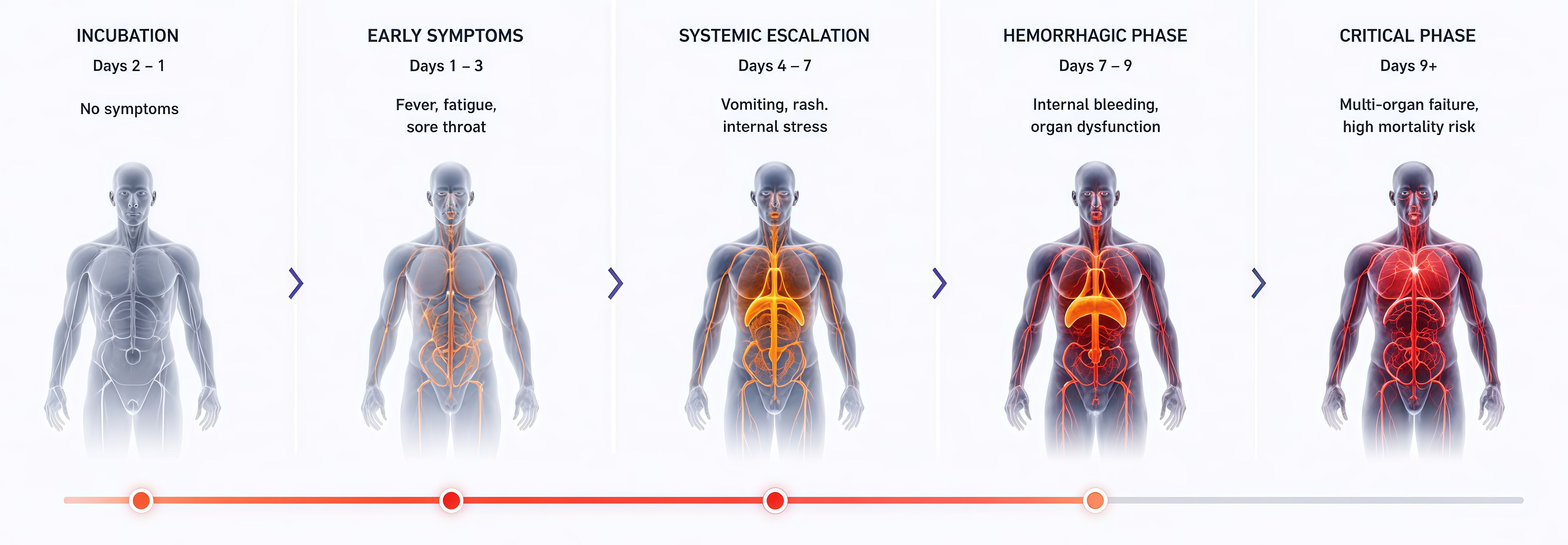
Virus actively replicates within dendritic cells and macrophages. No clinical symptoms; patient is not yet infectious. Internal systemic seeding begins.
Sudden onset of 'dry' symptoms: high-grade fever (>38.6°C), severe headache, myalgia, and malaise. Profound fatigue as the immune system collapses.
Escalation to 'wet' symptoms: continuous vomiting, watery diarrhea, and abdominal pain. Massive electrolyte loss and hypovolemic shock risk.
Disseminated Intravascular Coagulation (DIC). Internal mucosal bleeding, hematemesis, and multi-organ shutdown. Terminal cytokine storm.