
EBOLA (EBOV) SURVEILLANCE & PATHOGEN INTELLIGENCE.
REAL-TIME EPIDEMIOLOGICAL MONITORING // GENOMIC ANALYSIS // CLINICAL RESPONSE PROTOCOLS
About Ebola Virus
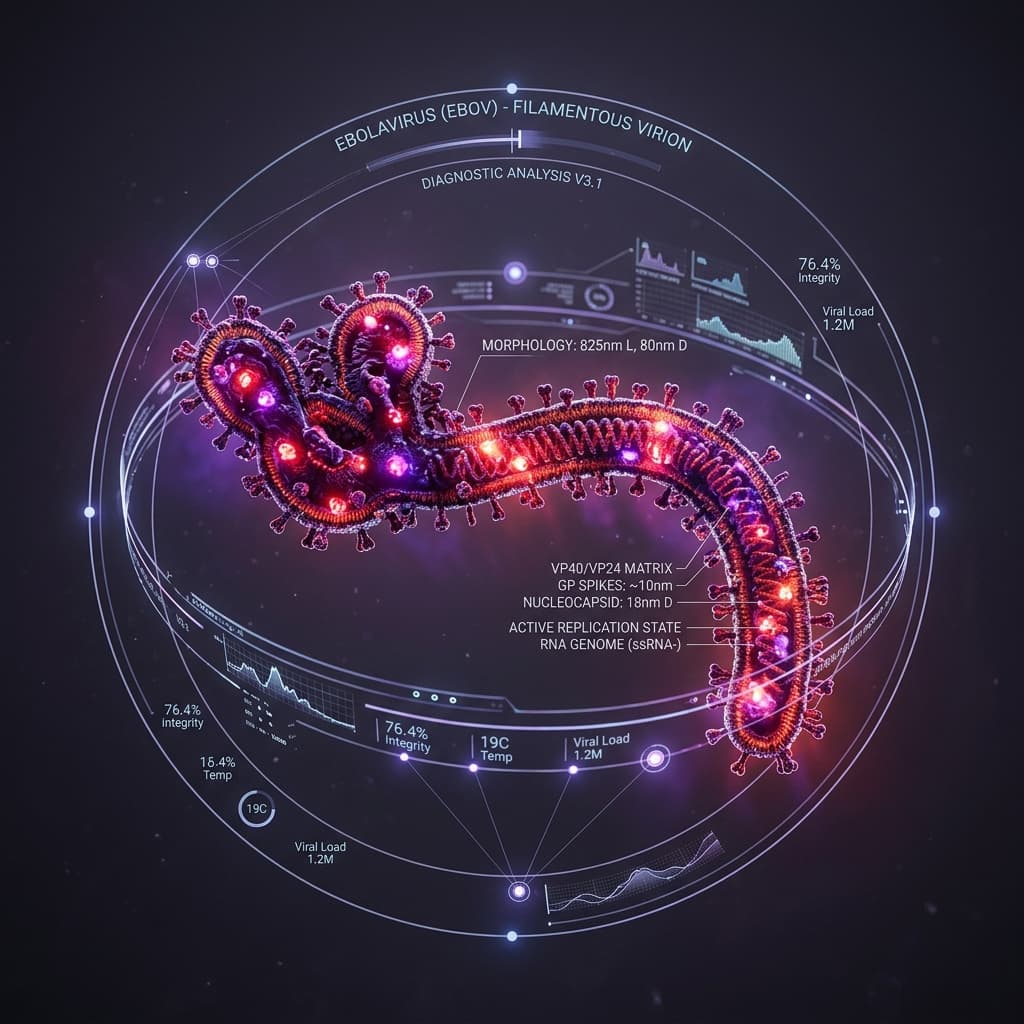
What is Ebola?
Ebola is a rare but very deadly virus. It causes severe fever and internal bleeding. It is one of the world's most dangerous diseases.
Where did it come from?
The virus was first found in 1976 in Africa. Scientists believe it originally came from fruit bats.
Where is it now?
Most outbreaks happen in Central and West Africa. Currently, there are active cases in the DR Congo (Ituri Province).
How does it spread?
Coming into contact with infected animals like bats, monkeys, or forest meat.
Touching the blood, sweat, or vomit of a sick person. You cannot catch it through the air.
Note: It cannot spread through the air or water like a cold.
How to stay safe?
Wash hands often with soap or sanitizer.
Do not touch people who have symptoms like high fever.
Avoid wild animal contact in outbreak areas.
Always seek medical help immediately if you have a fever in an outbreak area.
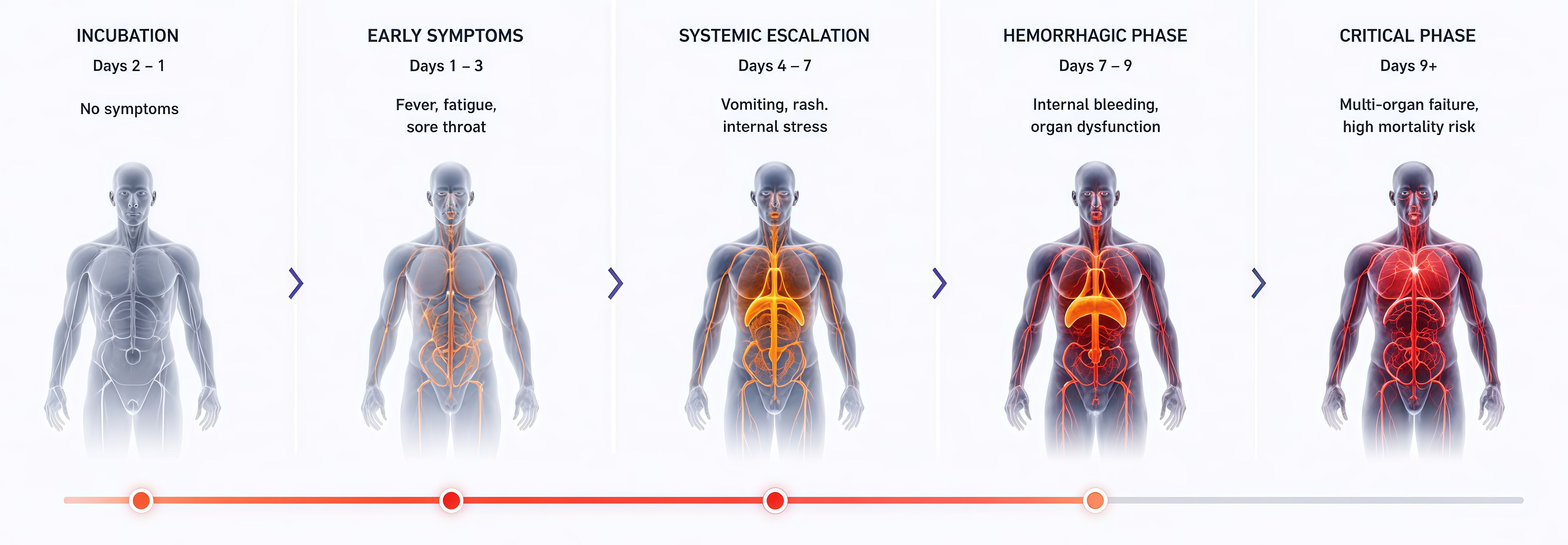
Sudden High Fever
Acute onset of high temperature, often exceeding 38.5°C.
"Fever is typically the first symptom to manifest after the incubation period (2-21 days). It is often accompanied by extreme fatigue and muscle pain."
Hemorrhagic Manifestations
Internal and external bleeding, including gastrointestinal and mucosal bleeding.
"Coagulation failure leads to petechiae, ecchymoses, and bleeding from venipuncture sites. Hematemesis and melena are common in late stages."
Multiorgan Failure
Rapid progression to renal and hepatic failure in advanced stages.
"Elevated serum creatinine and liver enzymes (AST/ALT) indicate systemic collapse. Proteinuria and anuria are significant indicators of renal distress."
REGN-EB3 (Inmazeb)
FDA APPROVEDTriple monoclonal antibody cocktail.
ERVEBO VACCINE
WIDE DEPLOYMENT97.5% efficacy in clinical ring trials.
Satellite data confirms unusual movement patterns along Bunia-Aru transit corridor.
Suspected transmission event in Bunia urban center. Ring Vaccination activated.
14 confirmed cases in mining corridor. Tier 4 isolation established.
Two hunters in Ituri Forest reported symptoms following bushmeat contact.
Rapid escalation in mining shaft contact network. Cluster expansion probability exceeds 84%. Tier 4 isolation protocols engaged.
12 suspected cases admitted to provincial isolation wing. Genomic drift sequencing (ITURI-26) underway. Contact tracing expanded to metro area.
Satellite monitoring of major transit routes between Ituri and neighboring provinces confirmed. Screening protocols active at 4 major border junctions.